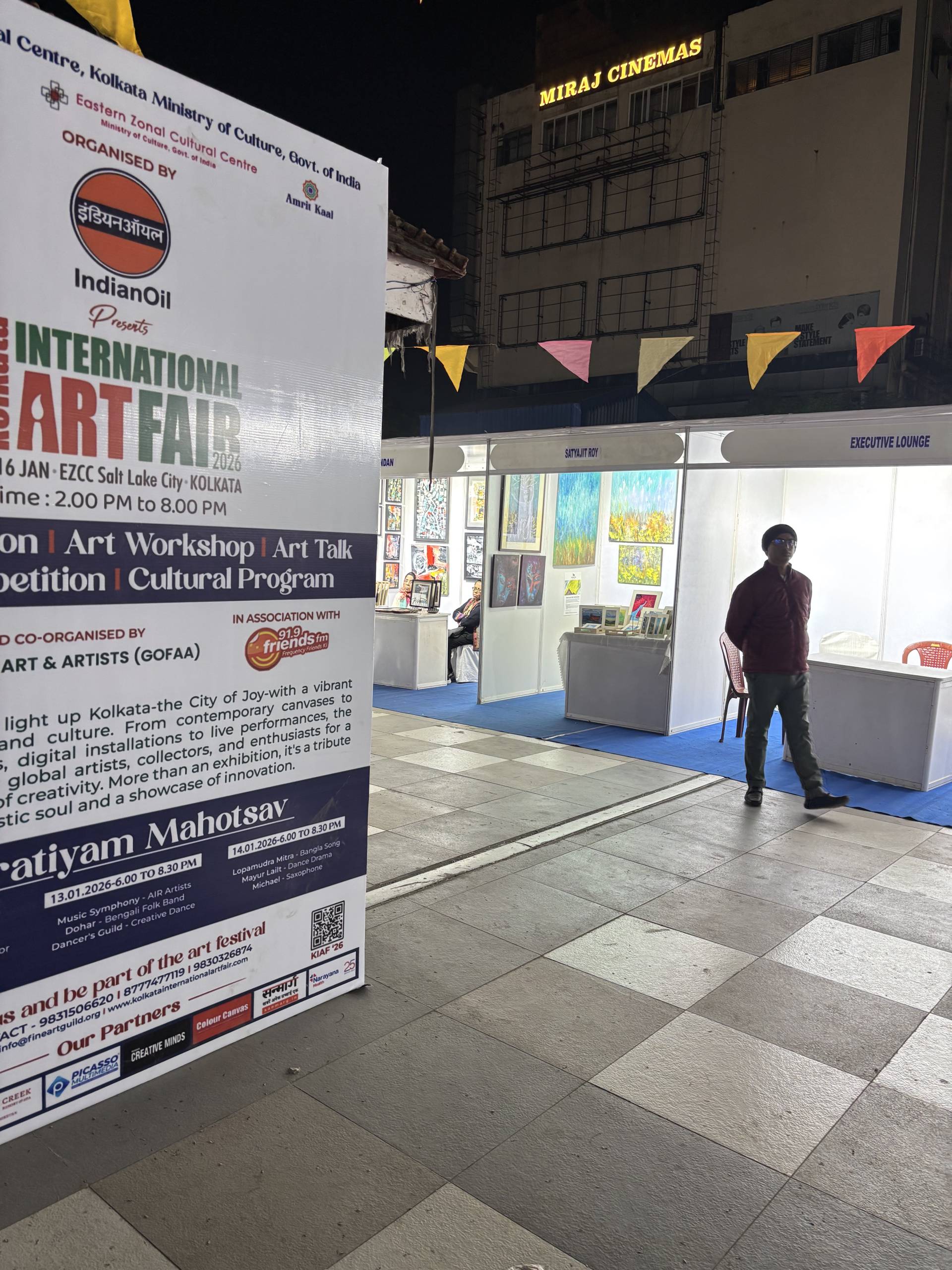
The recently concluded MIAF 2026 – Kolkata International Art Fair once again demonstrated why Kolkata continues to remain one of India’s most culturally layered and intellectually vibrant art capitals. More than just an exhibition platform, the fair evolved into a dynamic meeting ground of artists, collectors, galleries, curators, students, designers, and global cultural observers — all converging around the evolving language of contemporary art.
For a city historically shaped by literature, theatre, cinema, music, and visual arts, MIAF 2026 carried forward Kolkata’s legacy while simultaneously opening conversations about the future of Indian contemporary expression in an increasingly interconnected world.
A Fair Beyond Commercial Exhibition
Unlike many purely market-driven art fairs, MIAF retained a strong sense of artistic inquiry and cultural engagement. The fair successfully balanced:
- Emerging contemporary voices
- Established modern masters
- Experimental mixed-media practices
- Traditional narratives reinterpreted in modern language
- International artistic collaborations
- Curatorial conversations around identity, heritage, and technology
The atmosphere reflected not merely an art market, but an ecosystem of ideas.
Artists from different parts of India and abroad showcased works spanning abstraction, figurative explorations, conceptual installations, digital experimentation, sculpture, printmaking, textile-based art, and heritage-inspired contemporary interpretations.
Kolkata’s Cultural DNA Was Visible Everywhere
What made the fair especially compelling was the unmistakable presence of Kolkata’s artistic temperament — intellectual yet emotional, political yet poetic, rooted yet experimental.
The city’s long-standing relationship with:
- The Bengal School
- Modern Indian art movements
- Folk traditions
- Printmaking culture
- Literary aesthetics
- Political visual narratives
…could be sensed throughout the fair.
Many works carried traces of memory, migration, urban fragmentation, spirituality, ecological anxieties, and evolving Indian identities — themes increasingly relevant in today’s global discourse.
The Rise of Contemporary Indian Narratives
One of the strongest impressions from MIAF 2026 was the growing confidence of Indian contemporary artists in presenting indigenous narratives without imitating Western visual frameworks.
A noticeable shift could be observed:
- Local stories were being treated as globally relevant.
- Folk aesthetics were entering contemporary abstraction.
- Heritage forms were being reconstructed through modern materials.
- Rural textures and urban anxieties were being merged into new visual vocabularies.
This transition reflects the maturation of the Indian contemporary art ecosystem itself.
Artists are no longer merely seeking international validation; they are increasingly building original visual languages rooted in Indian experiences while remaining globally intelligible.
Strong Collector and Institutional Interest
The fair also indicated growing collector maturity in Eastern India.
Beyond decorative acquisitions, there appeared to be increasing interest in:
- Investment-grade contemporary art
- Experimental practices
- Mid-career artists
- Archival works
- Cultural storytelling through art
- Art as a long-term intellectual asset
Institutional visitors, corporate representatives, hospitality groups, architects, and interior consultants were also actively engaging with galleries and artists, signalling the broader integration of art into lifestyle, business, and public spaces.
Technology, Media & The Future of Art Presentation
Another important development visible at MIAF 2026 was the increasing integration of:
- Digital presentation formats
- AI-assisted visual experimentation
- NFT conversations
- Projection-based storytelling
- Immersive display concepts
- Social media-led discoverability
The younger generation of artists understands that visibility today extends beyond gallery walls. Digital ecosystems are becoming essential tools for:
- Audience engagement
- Global exposure
- Collector outreach
- Personal branding
- Archival documentation
For contemporary artists, art creation and digital storytelling are now deeply interconnected.
Why Art Fairs Matter More Than Ever
In today’s rapidly digitised and commercially accelerated world, art fairs like MIAF perform a deeper social function.
They create spaces where:
- Ideas slow down
- Visual dialogue expands
- Human emotion regains importance
- Cultural memory survives
- Creative dissent remains visible
- Society reflects upon itself
Art fairs are not merely commercial events — they are indicators of civilisational confidence.
The scale, diversity, and participation at MIAF 2026 suggest that India’s cultural economy is steadily evolving into a globally influential creative force.
My Reflections as an Artist
As a contemporary artist myself, attending MIAF 2026 was both inspiring and reflective.
The fair reinforced an important realization:
The future of Indian art will belong to artists who can successfully balance:
- authenticity with innovation,
- heritage with experimentation,
- emotional depth with visual intelligence,
- and local identity with global relevance.
Kolkata remains uniquely positioned to nurture such conversations because the city still values intellectual engagement alongside artistic practice.
In many ways, MIAF 2026 was not merely an art fair — it was a cultural mirror reflecting the evolving aspirations of contemporary India.
Written by:
Satyajit Roy
Founder – Satyajit Roy ArtDecore
Contemporary Artist | Creative Entrepreneur | Cultural Commentator